 Search


Breakthrough I: An original Class I antibody drug for treating Alzheimer's disease has received clinical trial approval from the National Medical Products Administration
With the acceleration of global population aging, Alzheimer's disease (AD) has emerged as a major health threat to the public in China. Professor Ruitian Liu’s team made a groundbreaking discovery of a β-amyloid aggregate (Aβo*3F) closely associated with the onset and progression of AD, and has developed a specific targeting antibody against Aβo*3F. Building on this breakthrough, the group collaborated with Beijing Wisdom Prosperity Biopharm Co., Ltd. to co-develop the novel Class I drug AA001 monoclonal antibody. This drug received clinical trial approval from the National Medical Products Administration (NMPA) and has conducted clinical trials. Phase I clinical data demonstrate that AA001 exhibits excellent safety and tolerability with a long half-life. It significantly outperforms existing clinical treatments in terms of medication cost, production cost, dosing frequency, and patient compliance. The development of AA001 represents a major breakthrough in the international AD treatment field and in AD pathogenesis research. It also marks a significant advancement in China's discovery of novel drug targets. AA001 holds promise as a safe and effective therapeutic agent for treating AD.
Breakthrough II: Precise modulation of protein refolding by rationally designed covalent organic frameworks
Precisely regulating protein conformation (folding) for biomanufacturing and biomedicine is of great significance. Professor Yao Chen’s team innovate a covalent organic framework (COF)-directed protein refolding strategy to modulate protein conformation by rationally designed covalent organic frameworks with adapted pore structures and customizable microenvironments. This strategy demonstrates high generality that can be applied to various proteins and diverse covalent organic frameworks. Furthermore, we use this covalent organic framework platform to build up solid-phase columns for continuous protein recovery and achieved a ~ 100% refolding yield and excellent recycling performance (30 cycles), enabling an integrated process for the extracting and refolding denatured proteins. This study creates a highly efficient and customizable covalent organic framework platform for precisely regulating proteins refolding and enhancing their performance, opening up a new avenue for advanced protein manufacturing. The relevant research finding was published in the journal Nature Communications (DOI: 10.1038/s41467-025-59368-z).
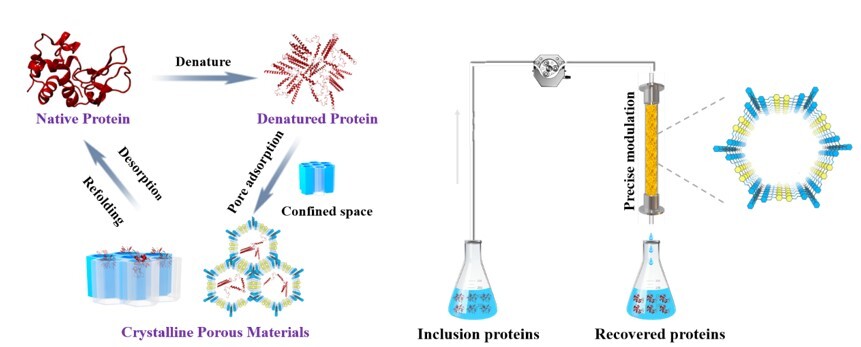
Fig. 1 Precise modulation of protein refolding by rationally designed covalent organic frameworks
Breakthrough III: Collagen innovation technology
Collagen is an important fundamental industrial material, and widely used in drug formulations, medical devices, tissue engineering, and regenerative medicine. An innovative method for collagen detection was established based on marker peptide using chromatography-mass spectrometry by Professor Guifeng Zhang’s team. The method advantages can achieve simultaneous qualitative and quantitative analysis of multiple proteins. Based on this technology, the world's first method standard for collagen research (ISO 6631:2025) was developed. The innovative method was further extended to the field of recombinant proteins, leading to the establishment of a recombinant collagen standard (YY/T 1954-2025). Base on the methodological innovation, a large-scale preparation process for medical collagen was developed, and a collagen raw material standard for implantable medical devices (YY/T 1985-2025) was formulated, providing key technical support for the high-quality development of China's collagen-based biomaterial industry.
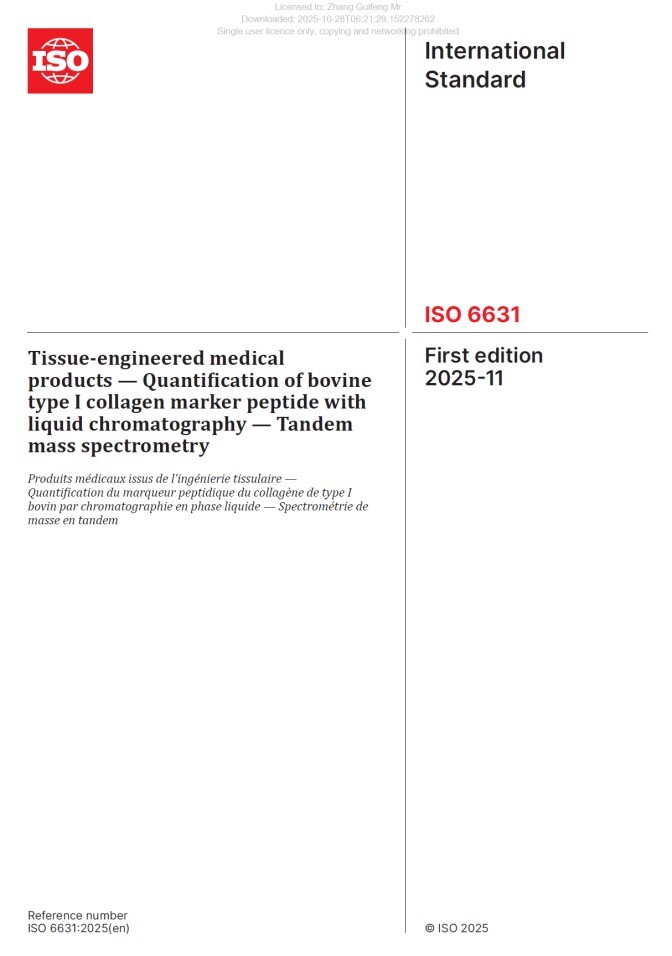
Fig. 2 The standard for collagen research methods (ISO 6631:2025)



 京公网安备110402500047号