 Search

In 2025, the division made a new breakthrough in basic and applied research, and 52 papers were published in peer-reviewed leading journals, including Nature Communications, Environment Science & Technology, Bioresource Technology, etc. 8 Chinese patents were granted. It has undertaken 30 projects, including the National Key Research and Development Plan of China, the Province Key Research and Development Program, and the General Program of the National Natural Science Foundation, and has undertaken 47 projects from the company.
Breakthrough I: First proposal of the counterion competitive dehydration mechanism in membrane separation
This study breaks through the traditional lithium-magnesium separation approach that relies on positively charged membranes and "co-ion competition." It was found that dense negatively charged nanofiltration membranes can achieve high magnesium rejection and extremely low lithium rejection, outperforming conventional solutions. Through experiments and molecular dynamics simulations, a new mechanism of "counterion competitive dehydration" was revealed for the first time: on the surface of the negatively charged membrane, enriched Mg²⁺ competes for water molecules in the hydration shell of Li⁺, leading to partial dehydration of Li⁺. This process weakens the size sieving effect while enhancing the electrostatic attraction between Li⁺ and the membrane, thereby significantly promoting the preferential and rapid permeation of Li⁺. This discovery refines the theory of ion transmembrane transport and provides new theoretical guidance for designing highly selective ion separation membranes (Nat. Commun., 2025, 16, 5731).
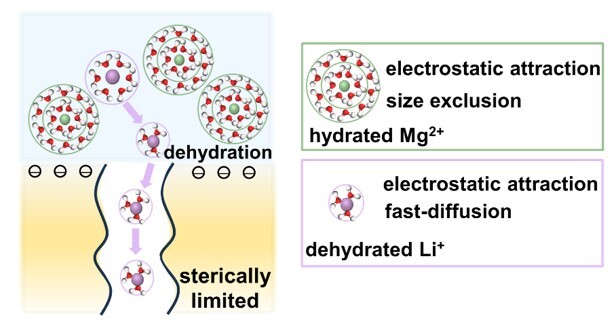
Fig. 1 Schematic illustration of the counterion competitive dehydration mechanism during nanofiltration membrane separation
Breakthrough II: Machine Learning–Enabled Membrane-Based Biopharmaceutical Separation
This study addresses the core challenges of biopharmaceutical membrane separations, namely, complex process mechanisms, long development cycles, and high costs, by exploring a data-driven paradigm for mechanism identification and process design. A dedicated biopharmaceutical membrane-separation database was established, enabling efficient iteration of machine-learning models to systematically elucidate the complex multiparameter coupling mechanisms involved in antibody purification and to accurately predict virus clearance performance. In parallel, Bayesian optimization was integrated with machine-learning models to enhance intelligent model adaptivity, achieving a significant increase in flux while maintaining protein selectivity. By deeply integrating machine learning with process fundamentals, this work provides a scalable and innovative solution for the intelligent design and intensification of biopharmaceutical membrane-separation processes (J. Membr. Sci., 2025, 732, 124266 & Sep. Purif. Technol., 2025, 363, 132122).
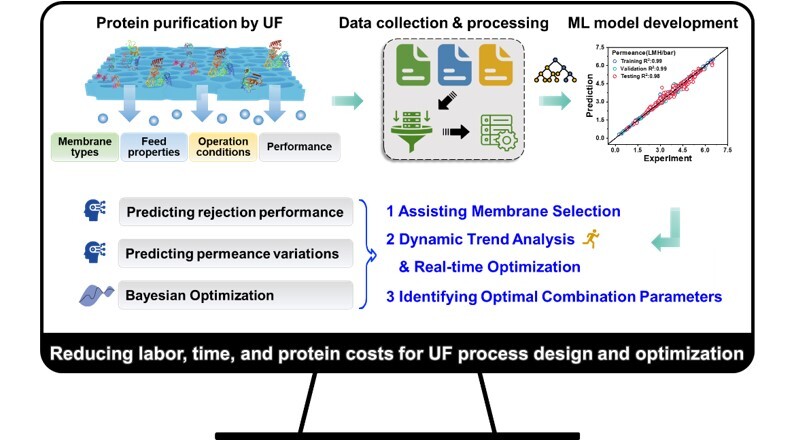
Fig. 2 Machine-learning modeling addresses the challenge of optimization and design in biopharmaceutical membrane separation processes arising from multifactorial coupling
Breakthrough Ⅲ: Pilot-scale demonstration of oligodextran production using an enzymatic membrane reactor and membrane-based fractionation
Targeting the critical need for high-precision separation in biopharmaceutical manufacturing, this study develops a continuously operated enzymatic membrane reactor (EMR) integrated with a multi-stage membrane cascade fractionation system for the controllable production and efficient purification of polysaccharide-based therapeutics, exemplified by oligodextran. By synergistically coupling enzymatic hydrolysis with membrane separation, the EMR achieves precise control of low-molecular-weight products through an intrinsic molecular-weight self-regulation mechanism, and the process has been successfully scaled up and operated stably in a hundred-ton-scale demonstration facility. Furthermore, a multi-membrane cascade enables efficient separation and purification of multicomponent products from dextran hydrolysates, delivering a product purity of 99.4% with an annual treatment capacity of 1056 m³. This work overcomes the inherent limitations of conventional chemical hydrolysis–solvent precipitation routes, namely high energy consumption, significant environmental burden, and broad molecular-weight distributions, and provides an engineering-validated solution for the green, continuous manufacture of polysaccharide biopharmaceuticals. (J. Membr. Sci., 2025, 717 123630; Chem. Eng. Sci., 2025, 311, 121568).
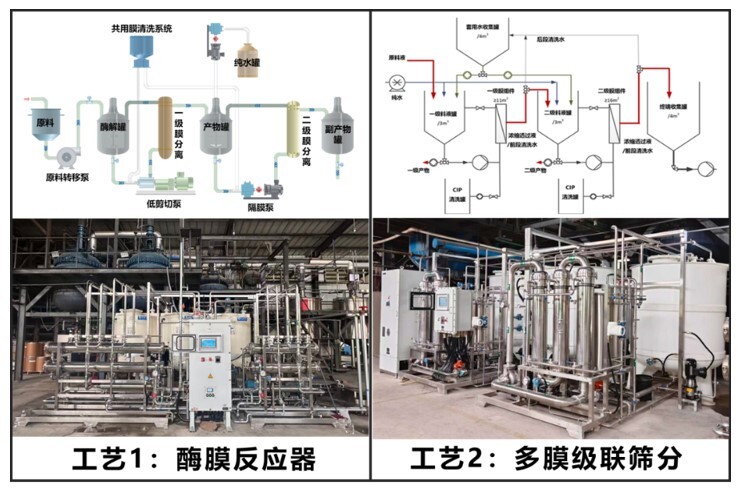
Fig. 3 Application demonstration for controllable production technology of oligodextrans



 京公网安备110402500047号