 Search


The Green Chemicals Research Department addresses the needs of the new energy and advanced materials sectors for high-end equipment, advanced material preparation methods and separation processes. Grounded in green reaction and separation science and engineering, the Department conducts research on green chemical technologies for the efficient conversion and utilization of high-value products. Its work has enabled the design and large-scale application of novel equipment for organosilicon monomer production, the development of a polyhedral strontium titanate–based quantum photoelectric integrated hydrogen and oxygen production technology, and the resolution of a key technical bottleneck in cascaded counter-current extraction for boron isotope enrichment.
Breakthrough I: Design and application of novel equipment for organosilicon monomer production
Silicone materials possess the characteristics of both organic and inorganic substances and are widely used in fields such as aerospace, chemical engineering, and healthcare. Among them, the monomer dimethyl-dichlorosilane (commonly referred to as "dimethyl monomer") stands as the most critical raw material for silicone synthesis. For decades, key production technologies for silicone monomers have been monopolized by overseas manufacturers, with gas-solid fluidized bed technology representing a major bottleneck in scaling up dimethyl monomer production. To tackle this challenge, our research team conducted an integrated investigation combining monomer synthesis reaction kinetics with the scale-up of the fluidized bed reactor. We established a multi-physics coupled model that simulates the interplay of flow dynamics, reaction kinetics, and heat transfer within the fluidized bed reactor. This was complemented by a numerical simulation-driven digital methodology for the scale-up of the reactor. Through systematic optimization of the fluidized bed configuration, gas distributor, and the size and arrangement of heat exchange tubes, we successfully addressed several technical issues. These included catalyst deactivation and carbon deposition caused by hotspots, as well as particle agglomeration within the reactor. The optimized design was implemented in the monomer synthesis reactor operated by Hubei Xingrui Silicone Company, resulting in an increase in dimethyl monomer yield from 82% to ~90% and providing technical foundation for the scale-up of a 400,000-ton-per-year silicone monomer reactor. Recognized as one of the core technological innovations, this achievement contributed to Hubei Xingrui Silicone Company and its partners being awarded the First Prize of the Hubei Provincial Science and Technology Progress Award in 2025.
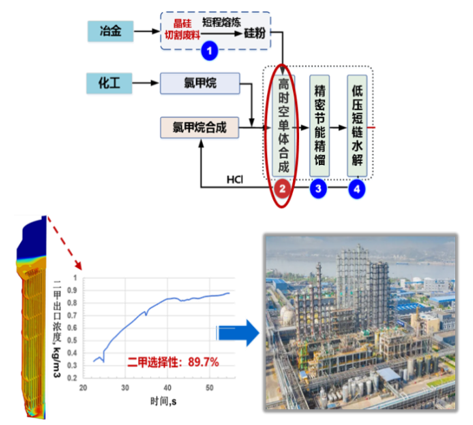
Fig. 1 Design and application of novel equipment for organosilicon monomer production
Breakthrough Ⅱ: Polyhedral Strontium Titanate Concentrated Light Quantum Technology for Integrated Hydrogen, Oxygen, Electricity, and Heat Production
The Research Group for Eco-friendly Resources Utilization has, for the first time globally, successfully synthesized strontium titanate crystals in the form of controllable nano-26-faceted polyhedra with a theoretical photoelectric conversion efficiency of 46.9%. The group has innovatively developed a "Polyhedral Strontium Titanate Concentrated Light Quantum Technology for Integrated Hydrogen, Oxygen, Electricity, and Heat Production," characterized by a short process flow, low energy consumption, low cost, and ease of scale-up. This technology has achieved comprehensive photoelectric conversion efficiency of 45%, a hydrogen production rate of 10 m³/h, and a photo-hydrogen quantum efficiency of 20%. Leveraging the multifaceted crystalline properties of strontium titanate, the technology highly concentrates sunlight and converts it into electricity and hydrogen energy, while producing thermal energy and oxygen as by-products. It is highly efficient, clean, and renewable. This marks the world's first new energy technology capable of utilizing the full solar spectrum in a single step. A single system can flexibly switch among power generation, hydrogen production, and heat supply functions, eliminating the substantial equipment investment and land requirements associated with traditional photovoltaic panels. To date, the technology has applied for 29 domestic patents and 3 international patents, of which 15 Chinese patents, 2 U.S. patents, and 1 Japanese patent have been granted. It was also awarded the Class A "China Good Technology" title in 2024. The world's first commercial "photolytic water splitting" hydrogen production line based on this technology was commissioned in Panzhihua City, Sichuan Province, in December 2025.
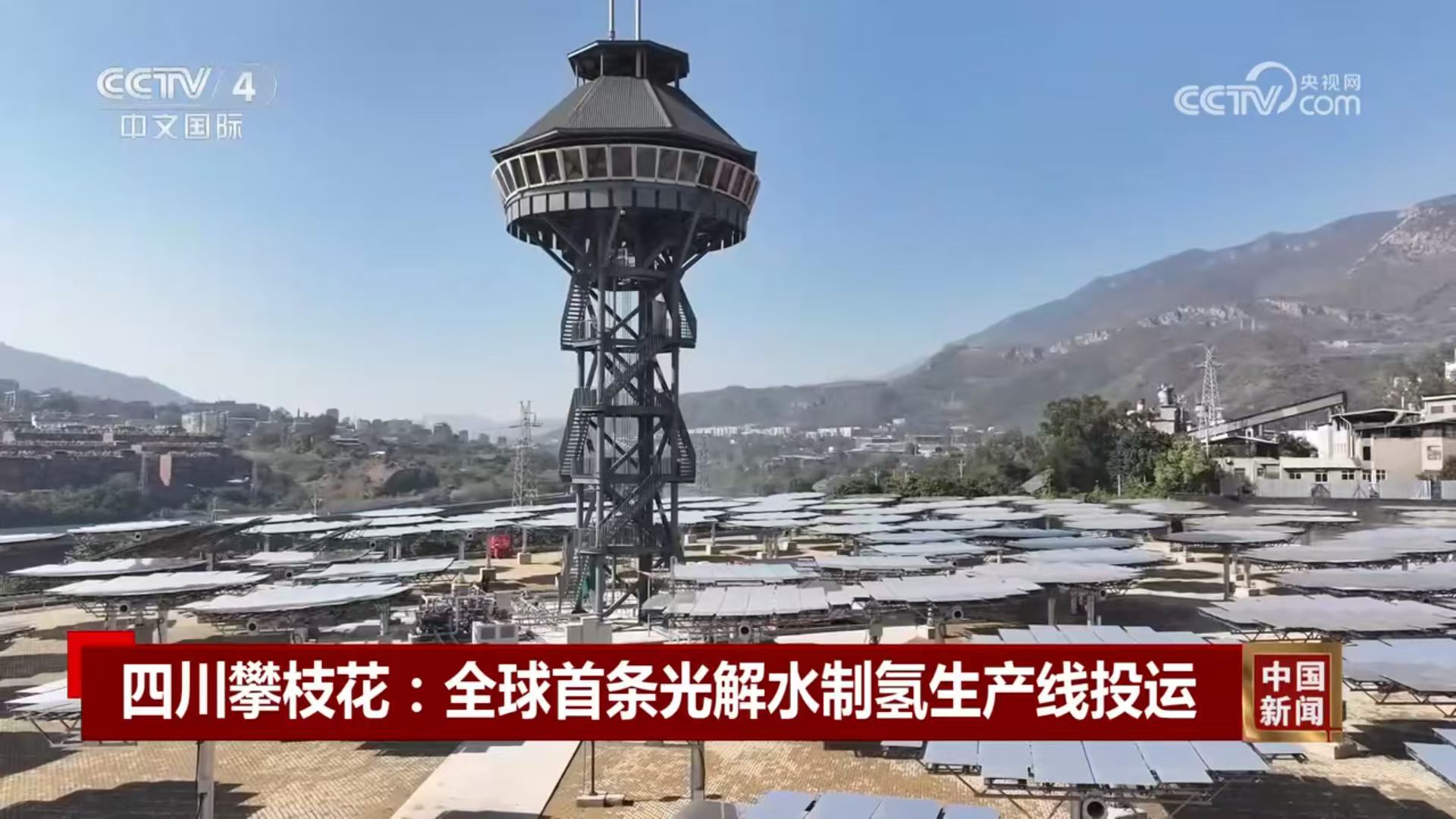
Fig. 2Polyhedral strontium titanate concentrated light quantum technology for integrated hydrogen, oxygen, electricity, and heat production
Breakthrough Ⅲ: Cascaded solvent extraction of boric acid for boron isotope enrichment
Boron occurs naturally as two stable isotopes, 10B and 11B, with natural abundances of 19.8% and 80.2%, respectively. Owing to its exceptionally high thermal neutron absorption cross section, 10B plays a critical role in boron neutron capture therapy for cancer treatment. By contrast, 11B exhibits a very low thermal neutron absorption cross section and excellent neutron transparency, making it indispensable for radiation-resistant materials in semiconductor manufacturing. Given their sharply contrasting neutron interaction properties, efficient separation of these two isotopes is essential to fully exploit their respective functionalities. At present, the only industrially implemented technology for boron isotope separation is chemical exchange distillation. However, this process suffers from stringent feedstock purity requirements, severe equipment corrosion and substantial environmental burdens. To address these limitations, we have developed a fundamentally new strategy for boron isotope enrichment based on cascaded solvent extraction of boric acid. By introducing a protonation-strength regulation strategy for extractants, precise control over the distribution ratios at each extraction stage was achieved, thereby overcoming the challenge of ineffective isotope enrichment in cascaded solvent-extraction systems. Using this approach, the abundance of 11B was increased from its natural level of 80% to 95%, while that of 10B was enriched from 20% to 30%. To our knowledge, this represents the first and only successful experimental demonstration worldwide of boron isotope enrichment via solvent extraction, highlighting its considerable potential for practical application and scale-up.
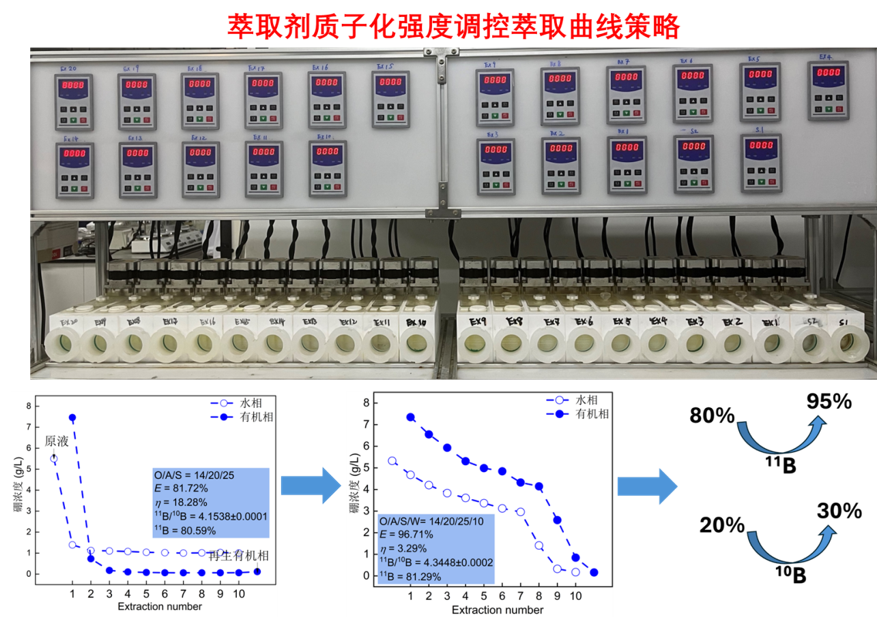
Fig.3 Cascade Enrichment technology of boron isotopes via solvent extraction of boric acid



 京公网安备110402500047号