 Search


Centering on reaction–transport regulation technologies and industrial applications of particulate materials, the division develops novel environmental purification materials, energy materials, and ultra-high-temperature strategic materials. It has been supported by projects, like the "Two Priorities" Project of the National Development and Reform Commission. Two key projects of the 14th Five-Year Plan National Key R&D Program and the Strategic Priority Research Program (A) of the Chinese Academy of Sciences have passed the annual assessment. The total value of technology development/transfer contracts has exceeded RMB 100 million. It has published 56 papers in journals such as Adv. Funct. Mater., J Catal and Chem. Eng. J, applied for 11 national invention patents, and obtained 10 authorized invention patents.
Breakthrough I: Green Large-Scale Preparation and Engineering Application of Environmentally Friendly Materials for Healthy Vehicle Cabins
Highly active amorphous MnO2 for the rapid catalytic decomposition of formaldehyde at room temperature has been developed, as well as Cu-doped crystalline porous materials for light-independent antibacterial applications (J Environ Sci, 2025, 147: 642; Appl Surf Sci, 2025, 708: 163710). The VOCs purification materials with dual adsorption and degradation functions, as well as antibacterial functional materials have reached an internationally leading level, and won the Second-Class Award for Science and Technology Progress of the China Society of Automotive Engineers (Figure 1).
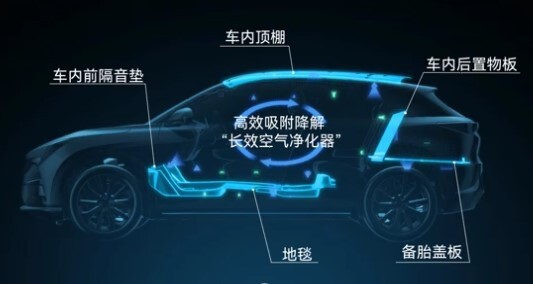
Fig.1 In-vehicle application of purification materials
Breakthrough Ⅱ: New Breakthroughs in the Design of Energy Materials
Radio frequency plasma processes and equipment have been developed, forming a spheroidization preparation technology for high-melting-point metal/ceramic powders (ACS Nano, 2025, 19(31): 28383). Long-life bottom-blowing gas supply elements and carbon-free foamy slag technology have been developed for electric furnace steelmaking. Layered oxide sodium-ion cathode materials achieved breakthrough in electrochemical performance based on a precise microstructural design strategy (Adv. Funct. Mater., 2025, e03812). The synergistic strain and electronic effects of Pd-based core-shell nanocatalysts have improved the electrocatalytic performance for acidic oxygen reduction (ACS Appl. Nano Mater., 2025, 20088).
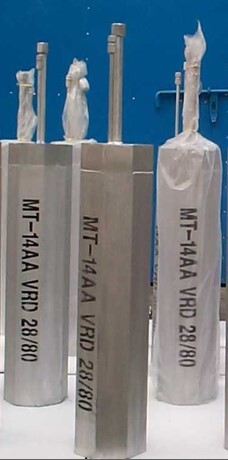
Fig.2 Bottom-blowing gas supply element for electric furnace steelmaking
Breakthrough Ⅲ: Controllable Preparation of Aerospace Materials
Solid-phase synthesis technology with high-temperature tension-directed diffusion, as well as organic precursor design technology that enhances reaction nucleation to improve the density of composite materials, have been developed. These technologies have enabled the preparation of high-temperature-resistant, high-strength, wave-transparent BN fibers and ultra-high temperature-resistant composite materials. Hundred-kilogram-scale production has been achieved.
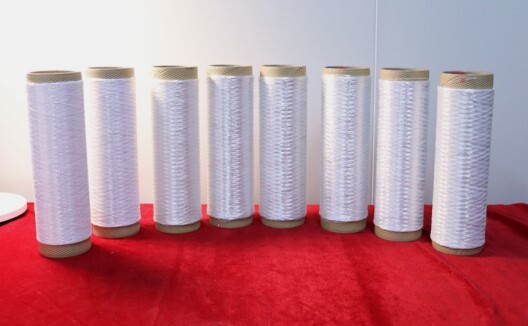
Fig.3 High-temperature resistant fiber



 京公网安备110402500047号